The Phone Call That Changed The World: Our Daughter’s ALD Diagnosis

This is one family’s experience and is not medical advice. Please talk with your care team before making medical decisions.
When Louisa was born on a sunny day in June, I felt a mix of joy, anxiety, exhaustion, and relief – just as I felt when I gave birth to my two daughters before her. She arrived via C-section, just like her sisters: healthy, hungry, and cherubic. There were no red flags, no issues. Her Apgar results were practically perfect. We left the hospital filled with hope and looking forward to settling into our new routine as a family of five.
A few days later, we got the phone call that changed the world. My husband and I were sitting on the couch as Louisa (Lulu for short) slept nearby. I saw on my iPhone that a call was coming through from Columbia University Hospital, and I picked up, immediately sensing something wasn’t okay. A doctor from pediatric genetics began to tell us very matter-of-factly that our daughter – our perfect, new, wonderful baby – had a possible peroxisomal disorder based on her newborn screening results.
I remember the ground underneath me began to sway and my ears started ringing. I literally felt like the world was closing in.
The doctor explained that peroxisomal disorders are a spectrum ranging from conditions not compatible with long-term life expectancy to something called X-Linked Adrenoleukodystrophy. He urged us to come in for further testing and warned us against googling these conditions. Of course we scoured the internet. The results were painful. All we could do was wait, and sit with this awful news that something might be very wrong with our child. We decided not to tell anyone, not even family, until we had concrete news.
It was pure agony. Those weeks were some of the darkest days of my life. Lulu was conceived via IVF with genetically tested embryos. Wouldn’t the genetic tests my husband and I did, plus the additional embryo screening, have picked up something of this magnitude?
By the day of our appointment, my husband and I were hoping that if Lulu had a peroxisomal disorder, it would be X-ALD because most websites stated females were not affected, which I would later learn is a misnomer. The doctors reminded us that she might not have X-ALD, which was terrifying considering the alternatives. Lulu underwent a full peroxisomal panel, and we were left with more waiting.
I called a friend whose daughter is also living with a rare disease. She was the only person I felt could relate to what I was feeling, and I am forever grateful for her advice during those early days.
After several weeks, the results came back positive for X-Linked ALD. Because the condition is normally inherited, my husband, middle daughter, and I also had to get tested. My oldest daughter was from a previous marriage, and I wanted to spare her unless absolutely necessary.
The results showed Lulu had a large deletion in her ABCD1 gene. The rest of us came back normal. This meant Lulu was a de novo case, which I learned is fairly rare. Our doctor recommended further testing to determine whether the deletion extended to other genes. More waiting and more painful uncertainty.
With a baseline diagnosis, I threw myself into researching ALD support groups and found the ALD Alliance in my home state of New York. I reached out, and they got back to me right away.
Through them, I learned women are affected by ALD symptoms, mostly later in life and at varying levels of severity. I also learned women are not the focus of many studies because the disease progresses more slowly in them, while boys face much more dire outcomes without treatment.
I cannot stress enough how powerful it was to connect with people living with the disease.
They had lived experience and were a calming force in a very tumultuous time. I am forever grateful for their guidance, perspective, and advocacy.
After a few more weeks, we learned the deletion did not extend beyond Lulu’s ABCD1 gene, which was good news. We finally had a confirmed diagnosis and a path forward. Even though there is no real standard of care for asymptomatic girls with ALD, knowing she has the condition and connecting with patients and doctors has given me information I can pass to her when it is time to make decisions about her health. She can be her own best advocate.
Being the mother of a de novo, asymptomatic girl with ALD has landed me in a very unusual position. I have yet to meet another one. There isn’t much for me to worry about at this moment, and I understand how lucky that makes me, and Lulu. Many families face a much harder battle, and I stand with them because we are all fighting for our children to grow up healthy and happy.
If I could go back and talk to myself on the day of Lulu’s diagnosis, I would give myself a hug. A really big one. I would urge myself to soak up every minute of maternity leave and not let fear hijack those precious days because it absolutely did.
I don’t think I really started to breathe until I began talking openly about Lulu’s diagnosis and connecting with other families.
It’s not something to be ashamed of and it’s not something to guard. I hope that by telling my story, I can help someone else because so many people have helped me. And I really believe that together we will help find a cure for this disease so there will be less suffering, less uncertainty, and more awareness.

Louisa’s name means brave warrior. We picked it well before she was born, but she has certainly lived up to it. She is a spunky, happy, opinionated 2-year-old. She also happens to have ALD. Because of this, she has a big extended family who has welcomed her and my family with open arms. Newborn screening gave us the gift of an early diagnosis, and we will never take that for granted.

About the Writer
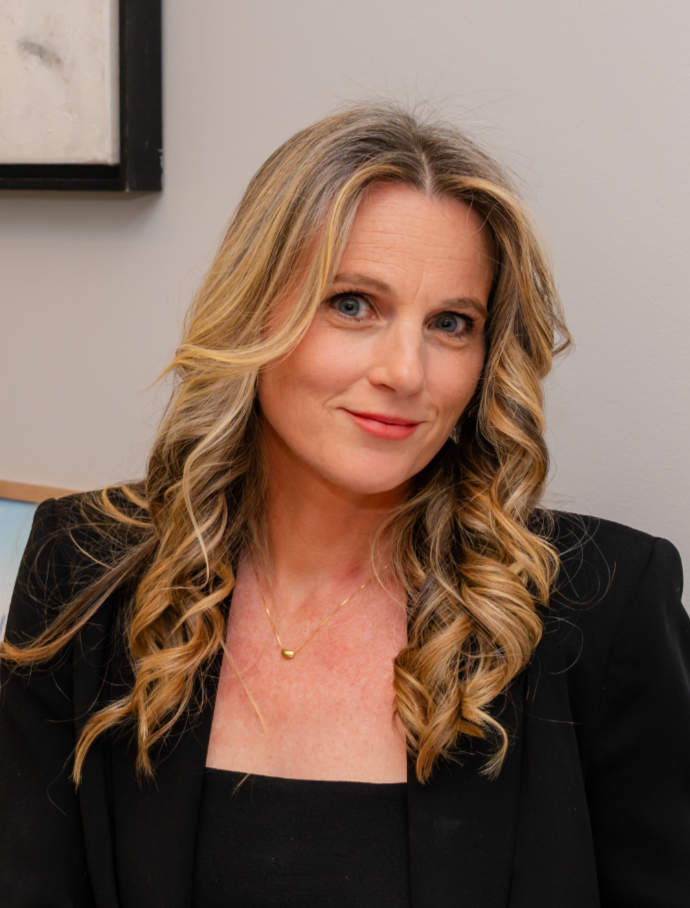
Ashley Brennan is a mom of three daughters and a communications professional living in New York.
Your story could help another family. If you’d like to share it, email us at info@cureald.org.
Follow @curealdtogether and @messymedicalmoms on Instagram
The content on this blog is shared for general information and support. It is not medical advice, and it does not replace the guidance of your physician or care team. Every person with ALD is different. Posts by guest writers reflect their own experiences and opinions, not necessarily those of Cure ALD. Please talk with your care team before making any decisions about diagnosis, treatment, or clinical trials.
Amazing article…so proud of you.
Beautifully written and heartfelt❤️