ALD Is Part of Our Story. It Doesn't Get to Write the Whole Thing.
Updated: 6 days ago

This is one family’s experience and is not medical advice. Please talk with your care team before making medical decisions.
Four weeks postpartum, I was sitting down for lunch with my family at Snowshoe Mountain in West Virginia when my phone rang. It was a Miami number. At the time, I worked for the University of Miami, and I was on maternity leave. Naturally, I ignored it.
Seconds later, my husband's phone rang. I told him to politely inform my employer that whatever they needed could wait another eight weeks. Except it wasn't work. It was the University of Miami Health System calling to tell us that our newborn son had screened positive for X-linked adrenoleukodystrophy (ALD), a condition I'd never heard of.
And just like that, our lives changed.
When Google Is Not Your Friend
I was in disbelief. Before having children, I'd undergone genetic screening for more than 400 conditions, and nothing had raised a red flag. My pediatrician initially suspected a false positive. I desperately wanted him to be right.
Additional testing confirmed the diagnosis. Family testing then revealed ALD in me, my brother, my mother, my aunt, and my grandfather. Five generations of a condition we never knew existed.
As a lawyer and a planner by nature (my planner literally has its own Instagram account), I researched everything. Unfortunately, Google isn't particularly comforting when you're reading about a potentially devastating neurological disease while holding your four-week-old baby.
ALD affects the body's ability to break down certain fats. In some boys, it can progress to cerebral ALD, causing serious brain damage. It can also affect adrenal function. I was reading worst-case scenarios while looking at a perfectly healthy newborn. How do you reconcile those realities?
The Grief Nobody Warns You About
I've spoken publicly about something difficult to admit: after our son’s diagnosis, I struggled to bond with him.
I spent hours crying in the shower, hiding my emotions from my family. I was frightened, angry, and desperate for someone to tell me there had been a mistake.
I was supposed to be enjoying those fleeting newborn moments. Instead, I was consumed by what might happen years later. I still carry guilt about that time.

Our son experienced early developmental delays. He's graduated from speech, occupational, and physical therapy and continues feeding therapy. Sometimes I wonder whether those months, when I struggled emotionally, affected his development. I don't know the answer, but it's a question I carry.
I can't go back. With the information and emotional capacity I had, I was doing the best I could. Knowing that and truly believing it are two different things.
Living Six Months at a Time
Today, our son is three, mischievous, and recently needed eight stitches after face-planting onto our tile floor. Typical toddler behavior. But every six months, we enter MRI season.
There are appointments, travel arrangements, and familiar anxiety. Brain MRIs matter because cerebral ALD can progress before symptoms appear. Early detection creates an opportunity for treatment before significant damage occurs. Thankfully, our son's MRIs have remained clear.
Then we return to our routines, and somebody still needs to get the kids to preschool. Life doesn't stop for ALD.
Advocacy Wasn't Part of the Plan
Navigating ALD means navigating a healthcare system that isn't always designed for rare diseases. Early on, a neurologist offered an appointment 18 months away; another specialist had an eight-month wait. One physician unfamiliar with ALD essentially asked me which tests to order.
Wonderful. I went to law school, not medical school.
Those experiences transformed frustration into advocacy. I've become involved with ALD Connect, received its 2024 Ambassador of the Year recognition, and joined Florida's Genetics and Newborn Screening Advisory Council.
Early diagnosis must come with access to surveillance, specialized care, and treatment. A duty to test must come with a duty to treat.
What I Want Other Families to Know
If you're navigating a new ALD diagnosis, find specialists who understand it and establish a surveillance plan. Connect with other families, learn about resources, and advocate when the system creates obstacles.
Equally important, care for yourself. It took seven therapy consultations before I found someone willing to learn about rare-disease parenting. ALD Connect became a lifeline. Newborn screening gives our children a fighting chance, but a diagnosis isn't a complete prediction of their future.
Learning to Live Beyond the Diagnosis
For a long time, ALD occupied more space in my mind than I wanted. Today, I can enjoy my little boy without constantly thinking about his diagnosis. I watch him play with his brother, celebrate milestones, and laugh at the chaos of raising two boys.
ALD hasn't disappeared. We still have MRIs, appointments, and uncertainty. I still struggle with guilt about the months I can't get back. But acceptance doesn't mean fear disappears; it means fear no longer dictates how we live.
If I could speak to the mother sitting in that West Virginia restaurant, I'd tell her to give herself grace, find her community, and ask for help.
Taking care of herself is part of taking care of her children. Most importantly, I'd tell her that one day she'll see her son first, not ALD.
And that's exactly what I see: a happy, mischievous three-year-old with a brother, a family who adores him, and a whole childhood ahead.
ALD will always be part of our family's story. But it doesn't get to be the whole story.

About the Writer
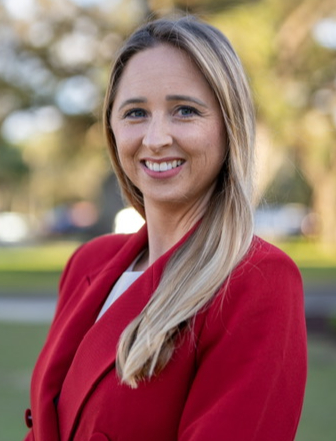
Alexis Larrea is a mother of two, lawyer, and passionate rare-disease advocate whose youngest son was diagnosed with ALD through newborn screening. She serves on Florida’s Genetics and Newborn Screening Advisory Council and was named ALD Connect’s 2024 Ambassador of the Year, advocating for early detection, access to care, and support for families navigating ALD.
Your story could help another family. If you’d like to share it, email us at info@cureald.org.
Follow @curealdtogether and @messymedicalmoms on Instagram
The content on this blog is shared for general information and support. It is not medical advice, and it does not replace the guidance of your physician or care team. Every person with ALD is different. Posts by guest writers reflect their own experiences and opinions, not necessarily those of Cure ALD. Please talk with your care team before making any decisions about diagnosis, treatment, or clinical trials.


Comments