Our Son Got a Chance. Every ALD Boy Deserves One.

This is one family’s experience and is not medical advice. Please talk with your care team before making medical decisions.
It was 2016, and we were watching our 12-year-old son Nicholas play soccer. At one point, he just took off down the field, running full throttle. My husband, Dave, and I looked at each other, and we knew. "He's back," we said. "It took a while, but he's really back."
That moment was a long time coming. Here is how we got there.
Where it started
My father had AMN, the adult form of ALD. He lived with it for several years, but in the end, ALD took his life. When I was 15, I found out I had inherited it from him. That meant I could pass it on to my children. That was a lot for a 15 year old girl to wrap her mind around. It changed my life forever.
ALD is a rare genetic disease that damages myelin, the protective coating around nerve cells in the brain. It also affects the spinal cord and the adrenal glands. It affects boys and men most severely, but women can be affected too. I started developing symptoms myself in my late thirties.
We had started the process of adoption when we found out we were pregnant. When Nicholas was born, we knew to have him tested right away. Early knowledge and identification is key and can be a matter of life or death for these boys.
The day we received the results will forever be burned in our memory. It was devastating as we held our perfect little baby boy. The test showed he had ALD.
Through my dad, we already had a connection with ALD specialists, and we enrolled Nicholas in a research study for Lorenzo's Oil at Johns Hopkins through the Kennedy Krieger Institute. Nicholas was also tested at just a few weeks old for adrenal insufficiency and continued to be monitored. It was traumatizing for a new mom to watch my newborn go through all of that bloodwork at just a few weeks old.
The watching years
After that, our life had a rhythm, although different from most families. Every year, Nicholas had an MRI. Every year, we waited for the results. The Lorenzo's Oil study was challenging. We navigated life with a toddler, and then an active elementary school-age son, who had to follow a strict low-fat diet and take nasty-tasting oil by mouth every day. But we did what we had to do to give him the best chance at a “normal” life.
I knew early treatment was crucial. That is why we kept up the yearly scans and the yearly visits to Johns Hopkins, as unpleasant as they were. The watch-and-wait period was excruciating.
Each scan brought the same question: would this be the year? We kept the appointments, and we kept waiting for the answer. Waiting was incredibly hard. I also know now what it gave us.
When Nicholas was 10, the scan showed a lesion. Our worst nightmare was coming true. The day I got the news, I felt the same awful feelings I had the day we found out he had ALD as a newborn. The room was spinning. Our world halted. He was diagnosed with childhood cerebral ALD, the form that attacks the brain. Nicholas had no outward symptoms yet. The scan found the lesion at its very earliest stages, before ALD could cause serious harm. All that watching had paid off.
Then came more scans, more appointments, and months of waiting to see if the disease would halt on its own. Finally, his doctors recommended a bone marrow transplant.
The transplant
A transplant replaces the body's blood and immune system with healthy donor cells. In Nicholas's case, those cells stopped ALD from spreading in the brain.
To prepare, doctors used heavy doses of chemotherapy to clear his immune system. That lowers the risk that his body will reject the donor cells.
He had his transplant in the early fall at age 11, using cord blood from an anonymous donor. We moved from Missouri to Minnesota in August 2016 for nearly four months so he could be treated by the team at the University of Minnesota.
For a month, Nicholas stayed in his hospital room. He missed his family, friends, school, teams, and home, all the normal things a 10-year-old usually has and does. He wanted to play basketball and soccer and go running. After the hospital, we stayed at the Ronald McDonald House for a few months. When we finally got back home in Missouri, he wore a mask everywhere we went while he healed. He was home-schooled for most of the rest of the school year, pretty much missing his entire sixth grade year.
As he got stronger, he started running again. He even played soccer. But it was the following spring before Dave and I felt Nicholas was truly getting back to his old self. That was the day on the soccer field. It was nearly nine months after his transplant.
A run, and a nonprofit
While Nicholas was going through his transplant, he told us he wanted to hold a Run/Walk for ALD. So we knew we had to make that a reality once he made it through the grueling journey of transplant. Within a year, we held our first Run for ALD in 2017. Soon after, we formed our nonprofit, Knockout ALD.
Our mission is to spread awareness of ALD and raise funds for research that leads to better outcomes for ALD boys. That includes research at the University of Minnesota where Nicholas had his transplant. The run also brings ALD families together, and we support other families on their journey.
This November, we will hold our 10th Annual Run for ALD near St. Louis. So far, we have raised over $360,000 for research. We hope it will be a celebration…of the gift of ten years Nicholas has been given since his transplant and the many years dedicated to raising awareness and giving hope to other ALD families in the hopes that there will be a future where every ALD boy has a chance to live their dreams. Every ALD boy deserves that chance.
Where Nicholas is now
Today, Nicholas is 22 years old and an aerospace engineering major at the University of Kansas. He is captain of the KU club triathlon team, leads the rocket team, and helps at NMDP (National Marrow Donor Program) drives on campus. In 2025, he completed a half IRONMAN. It was a dream fueled by his Make-A-Wish trip to the IRONMAN World Championships in 2017.
He still needs regular testing for years to come, so that ALD does not return unnoticed. He also battles the daily challenges of adrenal insufficiency, especially as a competitive triathlete. Even so, Nicholas is a success story for a devastating disease, and we couldn't be more grateful.
If ALD is in your family
The watch-and-wait years are hard. They are also what gave Nicholas his chance. Here is what I would tell another family:
Ask about testing early. Knowing is what makes monitoring and treatment possible.
Find ALD specialists, and keep the yearly appointments, even when everything feels fine.
Do not wait for symptoms. Early diagnosis and early treatment saved our son's life.
Advocate for your child. Do everything possible to get them the best ALD team and care.
There is HOPE and research is making progress.
This is also why I became an advocate for newborn screening. I served as a parent advocate on the Missouri ALD Newborn Screening Task Force. Missouri began screening all newborns for ALD in December 2022. Without screening, ALD can attack the brain aggressively, and boys can lose neurological function.
We want all ALD boys to have the chance Nicholas has had.
Learn more about Knockout ALD at www.knockoutald.com

About the Writer
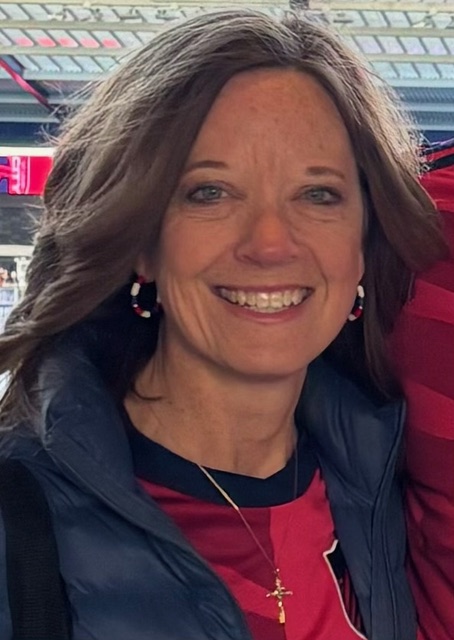
Julie Purschke is the mom of Nicholas, who has ALD, and the founder of Knockout ALD, a nonprofit that raises awareness and funds for ALD research. She served as a parent advocate on the Missouri ALD Newborn Screening Task Force.
Your story could help another family. If you’d like to share it, email us at info@cureald.org.
Follow @curealdtogether and @messymedicalmoms on Instagram
The content on this blog is shared for general information and support. It is not medical advice, and it does not replace the guidance of your physician or care team. Every person with ALD is different. Posts by guest writers reflect their own experiences and opinions, not necessarily those of Cure ALD. Please talk with your care team before making any decisions about diagnosis, treatment, or clinical trials.


Comments